


Frequent and prolonged exposure to the sun, whether at the beach, in the countryside or around swimming pools, can damage our skin in the short, medium and/or long term. The consequences can range from irritation and erythema to burns of varying intensity and skin cancer.

Sunbathing
Please remember
- Sunbathe in moderation, progressively, and always walk around, avoiding the central hours of the day.
- Avoid prolonged exposure to the sun and always use some type of sunscreen suitable for your skin. It is recommended that you apply sunscreen half an hour before sun exposure and reapply it every two hours, depending on how long you are exposed to the sun for.
- Limit sun exposure for children under three years old and make sure they drink water regularly.
- Water, sand, and snow reflect the sun’s rays, increasing their effects on the skin. The risk of sunburn is higher when climbing in the mountains.
- Alternate periods of sun and shade and refresh yourself with water frequently.
- Drink water often to prevent dehydration.
- Sunglasses prevent the development of eye diseases.
- Wearing light, cotton clothing and protecting your head with a cap or hat will help you achieve safe and effective sun protection.
What can you do if, despite these tips, your skin has burned?
Cool the burnt areas with cold compresses.
Drink plenty of water or other fluids (avoid alcoholic beverages).
Go to the health centre if the burnt area is very large. The severity of a burn depends on the extent of the skin it affects.
What should you not do if your skin has been burned?
Touch the burnt area with your hands.
Prick any blisters that may have formed.
Sun protection in childhood
Cautionary sun exposure is beneficial as it promotes the formation of vitamin D, which is essential for proper bone development. It also produces positive psychological effects as it is pleasant and improves our mood. However, if precautions are not taken, solar radiation can also pose risks such as skin burns, sunstroke, cataracts, blemishes and premature skin ageing. However, the most serious risk is its ability to promote the development of malignant skin tumours, including both melanomas and non-melanomas.
More than 4,000 cases of melanoma are diagnosed in Spain each year, a figure which is increasing due to the thinning of the ozone layer making solar radiation more harmful. Although ultraviolet B (UVB) radiation is the main culprit, it is also necessary to protect yourself from ultraviolet A (UVA) radiation.
Although most skin diseases arise in adulthood, they are mainly caused by exposure to factors before the age of 18, as the skin remembers this damage and it accumulates over time. That is why prevention in childhood is essential.
FAQ
Avoid the middle of the day (11am-4pm), if it is not possible to avoid this time, keep the child in the shade.
- Dress them in long, light-colored clothing: a loose-fitting, long-sleeved shirt and shorts, preferably made of dense, opaque cotton. A wide-brimmed hat is better than a cap because it protects the neck and ears.
- Once the child is old enough – that is, as soon as they can tolerate them – they should wear approved sunglasses (with UV protection) that block both UVB and UVA rays.
- Use Sunscreens; In general, Factors 15 or higher are always recommended. The recommended protection levels will vary depending on skin type or phototype:
- In phototypes I and II (very white skin, red or blonde hair and light eyes) very high factors are required: 50
- In phototype III (light skin, brown or dark blond hair and brown or gray eyes) medium factors are needed: 30-50
- In phototype IV (dark skin and hair) a lower factor: 15-30 can be used.
- For children under 3, the factor must be at least 30.
Sunscreen should be applied to dry skin half an hour before exposure; it should cover all exposed areas (especially the face); it should be reapplied every two hours; it should be water-resistant; and it should protect against both UVB and UVA rays. The use of sunscreen is essential, but it does not replace the other measures mentioned above; rather, it complements them.
Sunscreens should be used to protect against the sun and not as an excuse to stay in the sun longer
- Do not apply substances containing alcohol, perfumes or fragrances to the skin, as these can cause photosensitivity.
- Avoid using tanning products or being exposed to other natural substances that promote tanning.
- Caution is advised for teenagers taking medication that should not be used in conjunction with sun exposure, such as certain acne treatments.
- Advice for babies: infants under 6 months should never be exposed to direct sunlight. They should always stay in the shade and wear clothing and sunscreen. The factor used must always be equal to or greater than 30. Avoid the middle of the day, provide frequent hydration, and in case of burns, they should always be evaluated by your pediatrician.
- Alternate bathing periods with other activities in the shade, thus avoiding long and continuous exposure to the sun.
- Maintain the same sun protection measures even on cloudy days. Sun
exposure doesn’t only occur at the beach, but also in swimming pools, the countryside, the mountains, during outdoor recreational activities or in urban environments, while playing sports, etc. - Being young does not imply a lower risk of sun-related complications; on the contrary, it is when protection is most important. Simply applying sunscreen does not allow for uncontrolled sunbathing; other protective measures are also necessary.
- Tanning is not healthy in itself, as it is the skin’s defence mechanism against severe damage caused by solar radiation. Any change in skin colour indicates irreversible damage.
Parents should follow the same guidelines to set an example and encourage healthy lifestyle habits. - Avoid using tanning beds as recent research has shown that it increases the risk of skin cancer.
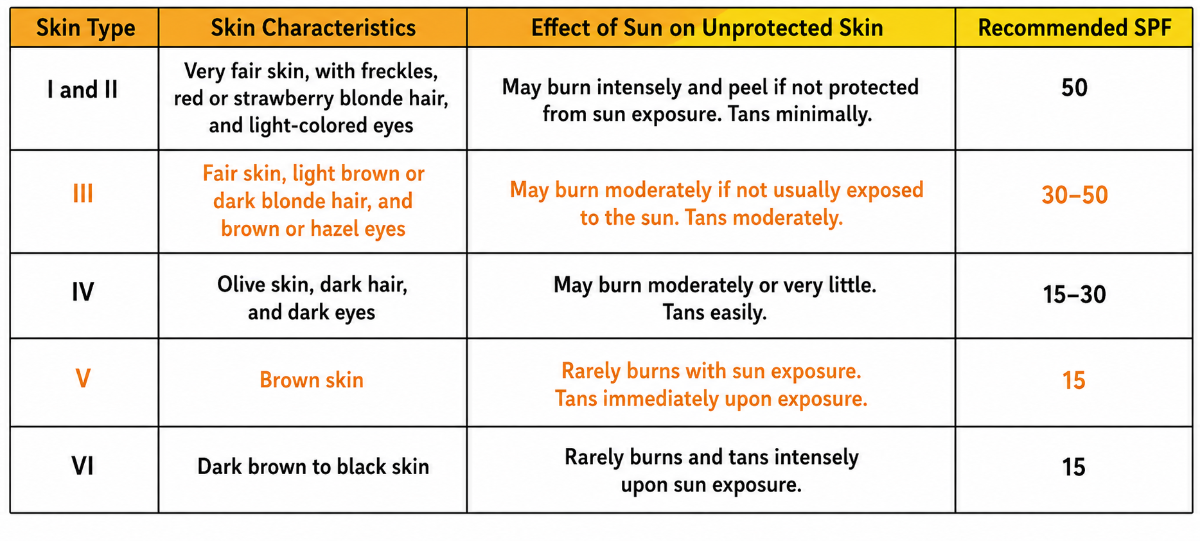
- Use sunscreens: in general, SPF 15 or higher is always recommended. The recommended protection levels will vary depending on skin type or phototype.
- Sunscreen should be applied to dry skin 30 minutes before sun exposure. It should cover all exposed areas, especially the face. It should be reapplied every two hours and be water-resistant. It should also protect against both ultraviolet B (UVB) and ultraviolet A (UVA) radiation.
- Sunscreens should be used to protect against the sun and not as an excuse to stay in the sun longer.